 @ericyocam
What If We Taught Students to Attack AI Before Teaching Them to Defend It?
As artificial intelligence becomes part of everyday life, cybersecurity education needs to evolve beyond traditional lectures and quizzes.
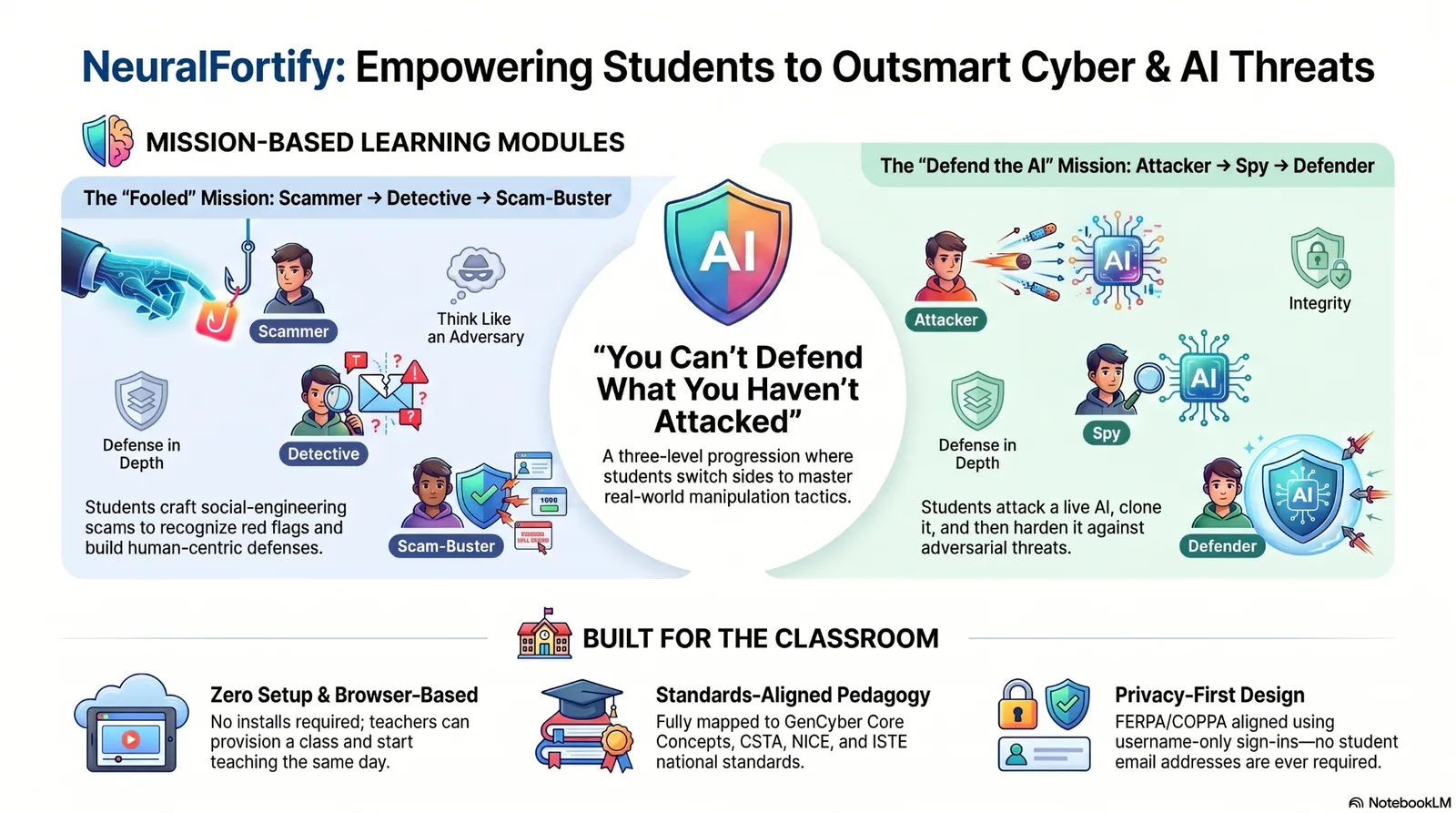
That's the idea behind NeuralFortify, an AI and cybersecurity literacy platform I've been developing for K–12 education.
The platform uses mission-based learning to teach students how cyberattacks and AI vulnerabilities work—and, more importantly, how to defend against them.
Two interactive learning missions:
1. Fooled — Scammer → Detective → Scam-Buster
Students experience social engineering from multiple perspectives. They create simulated scams, investigate suspicious messages, and learn to recognize and defend against manipulation.
2. Defend the AI — Attacker → Spy → Defender
Students explore adversarial AI through hands-on scenarios involving attacks, model behavior, and defensive strategies.
The underlying educational philosophy is simple:
"You Can't Defend What You Haven't Attacked."
NeuralFortify is designed for classroom use, with browser-based access, standards-aligned learning objectives, and a privacy-first approach.
My question for the Lounge.ai community:
As AI becomes more accessible to younger students, should we be teaching them how AI systems can be attacked and manipulated—not just how to use AI tools?
I'd especially welcome feedback from educators, AI founders, cybersecurity researchers, and EdTech developers.











0 comments